
Why Fall Is Peel Season: Chemical Peel Benefits for Your Skin

Maybe summer left a little more behind on your skin than you expected.
You made it through months of heat, sunscreen, sweat, outdoor activities, and plenty of time in the sun. Now that fall is here, you may be looking in the mirror and noticing that your skin looks different.
Maybe dark spots seem more noticeable. Your texture feels rougher. Old breakout marks are easier to see. Or your skin simply looks dull and like it could use a reset.
This is one reason I get excited about fall in the treatment room.
It is peel season.
Chemical peels can help improve dullness, uneven texture, discoloration, congestion, post-breakout marks, and fine lines by encouraging controlled exfoliation and skin renewal.
If you are noticing those kinds of changes and wondering whether a peel could help, this is for you. We are going to look at chemical peel benefits, why fall is such a popular time for professional resurfacing, what you can expect during and after a peel, when a series of peels may make more sense than a single treatment, and how I decide whether a peel is actually the right choice for your skin.
When your skin looks tired after summer, understanding what a peel can and cannot do makes it easier to choose a treatment that supports both your skin health and how confident you feel in it.
What Is a Chemical Peel and What Does It Do?
If you have never had a chemical peel, the name can sound a little intimidating.
You may picture layers of skin coming off or assume you are going to spend the next week hiding at home.
That is not necessarily what happens.
I've had clients come in white-knuckled expecting to walk out looking like they lost a fight with a cheese grater, that's just not how any of my peels go.
A chemical peel uses a carefully selected exfoliating solution to help remove surface buildup and encourage skin renewal. Different peels use different ingredients and strengths, so the experience can vary quite a bit.
Some are relatively gentle. Others involve more noticeable exfoliation and downtime. And not every chemical peel leaves you visibly peeling afterward.
When you come in for a peel, I am looking at your skin.
What are you hoping to improve? What are you using at home? Is your skin feeling sensitive or irritated? Are we working on discoloration, congestion, post-breakout marks, rough texture, or dullness?
Sometimes a peel makes sense. Sometimes your skin needs something else.
I am never trying to give you the strongest peel possible. I want to choose something that makes sense for what your skin needs right now.
If you're new to peels and still have questions, you can read more about safe, customized chemical peels in Hoboken, including some of the questions I hear most often.
Why Is Fall Considered Peel Season?
There is a reason you hear estheticians talk about "peel season" once summer starts winding down.
Summer usually means more sun exposure, more sweating, more time outdoors, and plenty of sunscreen. By fall, you may start noticing some of what those months left behind.
Sun spots may look darker. Your skin may feel rougher. Congestion may still be hanging around. Areas of discoloration may suddenly seem easier to see.
That makes fall a nice time to take another look at your skin and decide whether some professional exfoliation could help.
It does not mean you can only get a chemical peel during fall, and fall does not automatically mean you need one. I still want to see what is happening with your skin first.
And even though summer is over, sunscreen isn't.
Here in Hoboken, we still get plenty of beautiful sunny days during fall. Sun protection remains important when we're exfoliating and resurfacing the skin, and the American Academy of Dermatology recommends daily sunscreen as part of at-home care after a chemical peel.
If your skin seems to be changing in more ways than one, it may also be time to take another look at your fall skincare routine. Sometimes a few changes at home can make just as much sense as changing what we do in the treatment room.
What Are the Benefits of a Chemical Peel?
The benefits really depend on what you want to improve.
A chemical peel is not going to fix every skin concern, but there are several reasons I may suggest one.
1. Improving the Appearance of Dark Spots and Sun Discoloration
If you spent a lot of time outside this summer, you may be noticing dark spots or areas of discoloration that seem more obvious now.
Professional exfoliation can help improve the appearance of some types of surface discoloration by lifting damaged skin cells from the skin's surface, including cells affected by UV exposure, so fresher-looking skin can come through.
A light peel can help fade sun damage and dark patches in the outer layers, while a medium chemical peel may be used for deeper pigmentation concerns such as age spots.
That does not mean one peel is going to make every dark spot disappear.
How we approach discoloration depends on what I am seeing, how long it has been there, and what you are doing at home.
And if we're trying to improve discoloration, SPF needs to stay part of your routine too.
2. Supporting a More Even-Looking Skin Tone
Sometimes it isn't one particular spot that bothers you. Your complexion may simply look less even than it used to.
Certain medium peels can help improve the appearance of uneven tone and pigmentation by reaching the dermis, the middle layer, and are often effective for moderate skin imperfections.
Melasma is a little different. It can be more complex than ordinary post-summer discoloration, so if that's one of your concerns, I want to know before we decide whether a peel makes sense for you.
3. Smoothing Rough or Uneven Texture
Run your fingers over your skin.
Does it feel a little rougher than it did a few months ago?
Dead skin buildup can contribute to that rough or uneven feeling. Professional exfoliation can help remove dead skin cells to improve skin texture, make enlarged pores look less noticeable, and support a smoother skin's appearance.
You might also notice texture when your makeup suddenly stops sitting as smoothly as it used to. When surface buildup is reduced, skincare products may absorb more easily.
4. Helping With Congestion and Breakout-Prone Skin
I do not automatically reach for a peel every time someone tells me they have acne.
Breakouts are not all the same.
Are you dealing with active breakouts and congestion? Is your skin irritated or especially sensitive? Or has the breakout cleared and you're more bothered by the marks it left behind?
I want to know what we're actually dealing with first.
Certain peels can be helpful for some types of congestion and breakout-prone skin; superficial peels are often used for acne-focused treatment across many skin types because they work on the outermost layer. Salicylic acid is a common option for congestion, and certain peel ingredients can help decrease excess oil production so pores stay clearer and may reduce future breakouts, but if your skin already feels irritated or compromised, exfoliating more aggressively may not be what it needs.
More exfoliation is not always better.
5. Improving the Appearance of Post-Breakout Marks
Sometimes the breakout is long gone, but the reminder is still there.
Those lingering marks can make your complexion look uneven even when your breakouts have improved.
Depending on your skin and the type of marks you have, a chemical peel may help gradually improve post-breakout discoloration, while medium and deep peels may also help soften some acne scars.
And gradually matters.
I would much rather work progressively and see how your skin responds than try to accomplish everything with one overly aggressive treatment.
6. Softening the Appearance of Fine Lines
Chemical peels can also be helpful when fine lines and other visible signs of aging are starting to bother you.
By encouraging exfoliation and skin renewal, certain peels—especially medium and deep peels—can boost collagen production, which helps soften fine lines and wrinkles and support smoother, more youthful skin over time.
You are still going to look like you.
The goal is simply to support the changes you would like to see in your skin.
7. Bringing Brightness Back to Dull Skin
Sometimes there is not one major concern.
Your skin just looks tired.
Maybe your complexion looks flat, or the skincare products that usually give you a nice glow do not seem to be doing quite as much.
Surface buildup can be part of that, and professional exfoliation removes dead cells to reveal new skin and more youthful skin underneath, helping the complexion look brighter and healthier skin can look more refreshed, revealing smoother texture.
But exfoliation isn't the answer to every case of dull skin. Dehydration, sun exposure, and what you're using at home can all play a role in why your skin has lost its glow.
Sometimes we need to look at more than one thing.
Will My Skin Peel After a Chemical Peel?
Maybe.
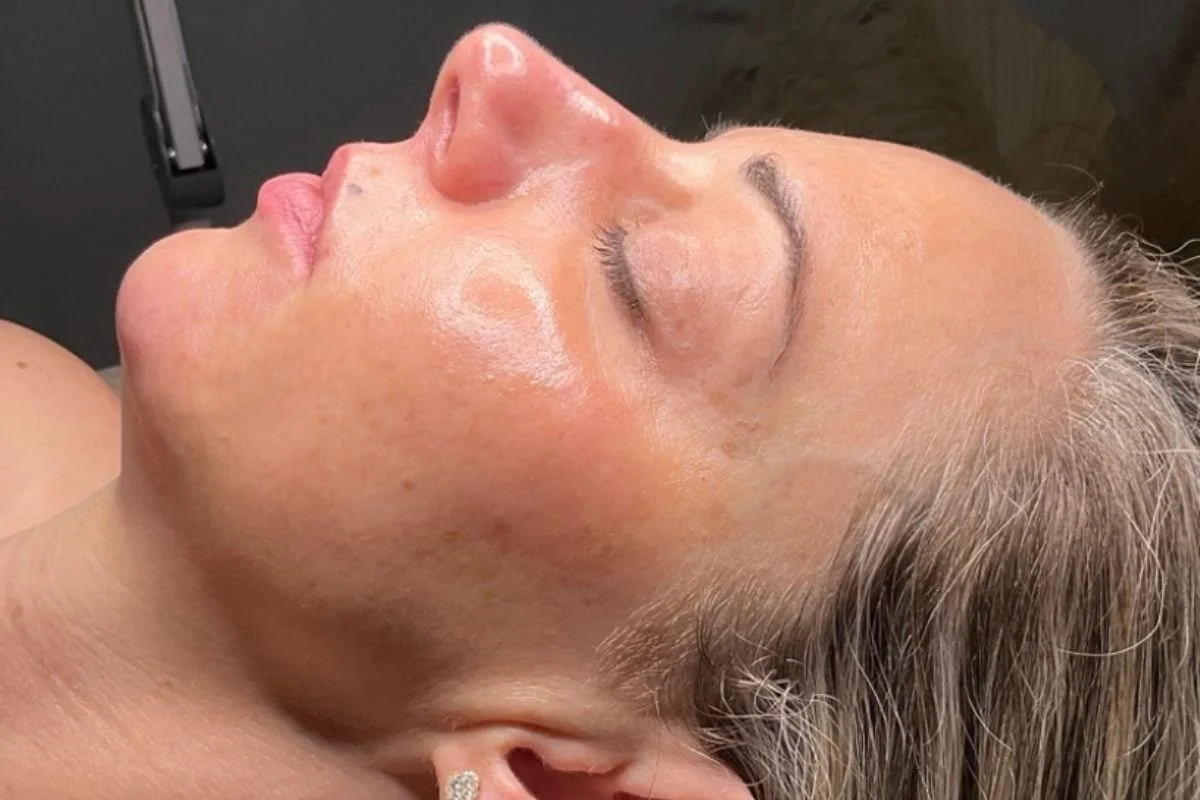
Despite the name, you do not have to visibly peel for a chemical peel to have done something.
Some people experience dryness or light flaking. Some peels can cause more noticeable peeling, and your skin may eventually peel or flake as older surface layers shed. And sometimes there is very little visible peeling at all.
It depends on the peel and how your skin responds.
I never want you thinking that your peel "didn't work" just because you didn't spend three days shedding skin.
More peeling does not automatically mean better results.
Before we do your peel, I'll let you know what you can reasonably expect afterward so you aren't comparing your skin to someone else's peel experience online.
How Do I Know If a Chemical Peel Is Right for My Skin?
This is where I really want to see your skin and talk with you.
Is it feeling sensitive or irritated? Are you dealing with active breakouts? What products and active ingredients are you using at home? Have you had another treatment recently? What are you hoping to improve?
I also want to know about things like sun exposure and anything health, medication, or skin-related that could affect the treatment. Different peels are chosen based on specific skin concerns and skin color, since not every option is appropriate for every patient.
This is also why I do not recommend treating a professional-strength chemical peel like a DIY skincare experiment. There are real risks with stronger acids, and the FDA has warned against using certain high-concentration chemical peel products without appropriate professional supervision. A chemical peel is a cosmetic procedure that should be selected and applied by a professional.
If you are not sure whether a peel is right for you, you do not have to figure that out before you come in.
We can talk about what you're noticing, look at your skin, and go from there.
Do You Need One Chemical Peel or a Series?
It would be nice if every skin concern disappeared after one appointment.
Skin usually does not work that way.
One peel may give your skin the refresh you are looking for. But discoloration, uneven texture, congestion, and post-breakout marks can take time, which is one reason a single chemical peel may not always be enough when you're working toward longer-term skin correction.
With a series, I can see how your skin responds and adjust what we're doing along the way instead of trying to do too much in one appointment.
How many peels you need, and how often we do them, really depends on your skin.
I would much rather see how your skin responds and go from there.
Peels Aren't Just for Your Face
When most people hear "chemical peel," they immediately think about the face.
But that is not the only place I may use one.
Depending on what is bothering you, customized peels can also be used on areas of the back or body.
Maybe you are dealing with body breakouts or the marks they left behind. Maybe rough texture or uneven-looking tone is bothering you somewhere other than your face.
If it is something you've been noticing, we can take a look and talk about your options.
What Should You Expect After a Chemical Peel?
What your skin looks and feels like afterward will depend on the peel.
Your skin may feel a little tighter or drier than usual. You may have some flaking or visible peeling, or you may not peel very much at all.
I'll give you aftercare instructions based on your treatment, but in general, this is a good time to keep things simple.
Focus on hydration. Do not pick at flaking skin or try to scrub it away. Keep using SPF.
If you normally use stronger actives at home, I'll also let you know when you can bring them back into your routine.
And please do not see peeling skin and decide it needs another scrub or exfoliating acid.
Give your skin a little time.
A Little Extra Hydration for Peel Season
Hydration is something I pay a lot of attention to this time of year, whether you've had a peel or not.
One product I've been loving lately is the HA5 Hydra Collagen Facial Mist.
I use it at the end of every facial now because it gives your skin lightweight, instant hydration.
It is formulated with five forms of hyaluronic acid plus vegan collagen, and it's an easy way to add a little more hydration to your routine without making things complicated.
The full retail price is $58.
Shop HA5 Hydra Collagen Facial Mist
You certainly do not need a new product simply because it is peel season. But if your skin has been feeling like it needs more hydration, we can talk about whether this one would be a good fit.
The Peel Season Reset at Graceful Skin & Body Spa
If a series makes sense for your skin, I do have a Peel Season Reset available this fall at Graceful Skin & Body Spa in Hoboken.
It includes 3 customized peels for $375, which is a savings of $125.
The offer is available through October 31, 2026 and cannot be combined with other offers.
And when I say customized, I mean it.
Your three peels do not automatically have to be identical. I can adjust what we're doing based on your goals and how your skin responds along the way.
We can also talk about treating your back or another area of the body if that is where your concerns are.
Not Sure If a Chemical Peel Is Right for You?
Maybe you're noticing more discoloration after summer. Maybe rough texture or post-breakout marks are bothering you. Or maybe your skin just feels a little dull and you're not quite sure what it needs.
You do not have to decide on a chemical peel before you come in.
We can talk about what you've been noticing, take a look at your skin, and figure out what makes sense from there. If a peel is not the best fit for severe wrinkles, sagging skin, or deep scars, you may be referred for other cosmetic procedures such as laser resurfacing or, in some cases, a dermatologic surgeon evaluation.
Whenever you're ready, you can book a consultation or appointment with me at Graceful Skin & Body Spa in Hoboken.
Sometimes your skin doesn't need more.
It just needs the right kind of support.